
A Digital Visitor Environment for Modern Museums
Built and deployed at Hiller Aviation Museum, California.
50,000+ sq ft museum space
800+ high-resolution
3D scans
On Hiller’s official website
Digital Twin Awards 2026 Winner

Case Study: Hiller Aviation Museum
Navigation, education, and engagement across a 50,000+ sq ft aviation museum.

2026 Digital Twin Awards Winner — Arts & Culture
International recognition for real-world use of digital environments. View the official listing
Why Museums Use It
Visitors arrive prepared
Visitors understand where to start, what to see, and how the museum is organized before arrival.
Stronger visitor engagement
Help visitors discover more of the collection and engage with exhibits in new ways.
Support education
Extend school visits, STEM programs, and educational content beyond the physical museum.
International visitors
Multilingual access makes museum content easier to explore for visitors from around the world.
Additional revenue opportunities
Premium tours, exclusive content, memberships, and digital experiences.
One connected environment
Bring maps, exhibits, media, visitor services, and educational resources together.
A Museum Digital Experience in Practice
15,000
Virtual visitors in the first 2 months
13 min
Average time spent in the experience
+15%
Growth in email subscribers
Results from a published Matterport museum case study. Individual results may vary. View the case study
From Existing Resources to One Connected Experience
Your existing website, maps, guides, and content remain valuable. The digital environment brings them together around the real museum space.

Before
❌ Useful information lives across maps, PDFs, webpages, and staff resources
❌ Visitors move between different sources to plan their visit
❌ No single place to understand the full museum
❌ First-time visitors may still need help understanding where to begin
❌ Multiple resources need to be managed separately
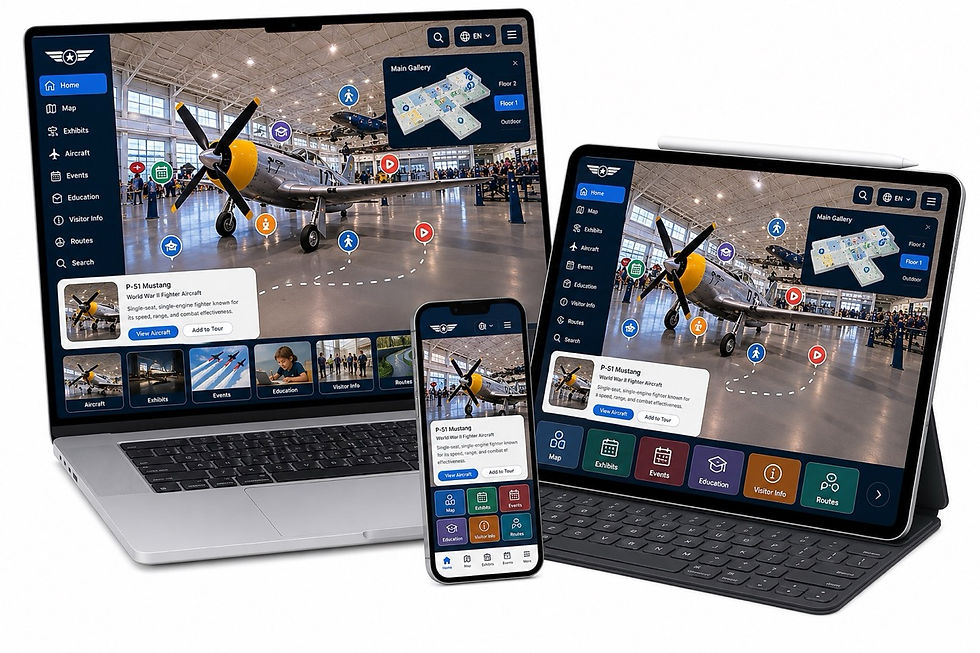
After
✓ One interactive layer connects existing museum resources
✓ Visitors understand the museum spatially before arrival
✓ Maps, exhibits, programs, and visitor information work together
✓ Information is available where visitors need it
✓ Existing content becomes easier to discover and use
What the Environment Can Do
Built around your museum. Expandable as your needs grow

Museum Guide
Clear orientation and navigation throughout the museum.

Guided Routes
Curated paths to explore highlights and exhibits.

Search & Discovery
Find specific exhibits, objects, and information instantly.

Audio & Multimedia
Stories, video, audio, documents, and educational content in context.

Multilingual Access
Make the same environment accessible to international visitors.
Beyond the Visitor Experience
The same digital environment can support additional museum needs without rebuilding the core experience.

Augmented Reality
Add interactive AR layers to exhibits — with stories, 3D content, and information accessible through visitors’ own smartphones.

AI & Smart Assistance
Add conversational guidance, exhibit discovery, visitor information, and on-demand assistance.

Premium & Revenue Experiences
Create member-only access, premium virtual experiences, sponsored content, remote programs, and other paid digital offerings.

Staff & Facility Use
Extend the same environment to staff training, facility orientation, event planning, documentation, and project coordination.
Start Small. One Area. One Use Case.
1
Select
Choose one gallery, exhibit, building, or visitor route.
2
Build
We create a focused environment using your existing content and spatial capture.
3
Evaluate
Your team reviews the environment in real conditions.
4
Expand
Expand only if the pilot proves value for your museum.
For selected projects, a focused pilot can be used to evaluate the approach before a broader rollout.
Let’s Explore What’s Possible for Your Museum
Interested in whether this approach could work for your museum? Send me a note and I’ll be happy to discuss your space, goals, or a possible first use case.

Slava Kiselev
Founder, DRONE & VR360
(669) 667-9080